
Spring naar hoofdinhoud
HARMONEAZ HARMONEAZ
Co-parenting

Co-parenting schedules explained: which model works for you?

Jeroen 7 min lezen
Co-parenting schedules explained: which model works for you?

You’ve decided on co-parenting. Then the next question comes quickly: how do we divide the time? There are dozens of arrangements possible, but in practice most separated parents choose from a handful of commonly used schedules.

In this article we explain the most popular co-parenting schedules step by step — with the pros and cons of each model, and practical guidance to help you choose what fits your situation.

Why the schedule matters so much

A co-parenting schedule is more than a timetable. It’s the structure your children rely on. A clear, predictable rhythm gives children stability — especially during a period when so much is changing.

At the same time, the schedule needs to be workable for both parents: work commitments, distance between homes, school hours and the ages of the children all play a role. There’s no universally “best” model. But a few questions help narrow it down:

  • How far apart do you live? And from school?
  • How old are the children, and how much structure do they need?
  • How flexible are your work schedules?
  • How well do you communicate — can you coordinate practically?

The schedule that sounds perfect on paper but creates too much friction in practice is not the right schedule. Choose something sustainable, even during busy periods.

The most commonly used co-parenting schedules

1. Week on, week off

The children spend one full week with parent A, then one full week with parent B. The handover typically happens on Friday afternoon after school or Sunday evening.

What it looks like: Week 1 → Parent A (Mon–Sun) Week 2 → Parent B (Mon–Sun)

Advantages:

  • Maximum predictability — children always know where they are
  • Few transitions per week
  • Room for routines in each household
  • Easy to plan for both parents

Disadvantages:

  • A full week away from one parent can feel long for young children (under 4–5)
  • Adjustments can be tricky when illness or unexpected situations arise
  • Requires a smooth handover moment

Best suited for: children aged 5 and up, parents with regular work schedules, parents living at a reasonable distance from each other.

2. The 5-2-2-5 schedule

Children switch more frequently than in week-on week-off. Over two weeks, they spend at least two consecutive days with each parent.

What it looks like (over 2 weeks): Mon–Fri (5 days) → Parent A Sat–Sun (2 days) → Parent B Mon–Tue (2 days) → Parent B Wed–Sun (5 days) → Parent A

Advantages:

  • Children see both parents every week
  • Shorter intervals, easier for younger children
  • Weekends alternate between parents

Disadvantages:

  • Four transitions per two weeks requires more coordination
  • More back-and-forth — some children find this tiring
  • Works best with a reliable co-parenting app or shared calendar

Best suited for: children aged 3–8, parents living close to each other, parents who communicate well.

3. The 2-2-3 schedule

Children switch twice a week. Each parent has fixed days, plus alternating weekends.

What it looks like (over 2 weeks): Mon–Tue (2 days) → Parent A Wed–Thu (2 days) → Parent B Fri–Sun (3 days) → Parent A

Mon–Tue (2 days) → Parent A Wed–Thu (2 days) → Parent B Fri–Sun (3 days) → Parent B

Advantages:

  • Children are never away from a parent for more than 3 days
  • Both parents are regularly present during the school week
  • Works well for young children who need short intervals

Disadvantages:

  • Many transitions — sometimes three per week
  • Requires a high degree of flexibility and coordination
  • Can be exhausting if parents live further apart

Best suited for: young children (2–6 years), parents living very close to each other, parents with flexible work arrangements.

4. The asymmetric model (e.g. weekends + Wednesday)

Children live primarily with one parent and see the other on fixed, recurring moments — for example every weekend from Friday to Sunday, plus Wednesday afternoon.

What it looks like: Mon–Thu → Parent A (primary parent) Wed 12:00–Thu 8:30 → Parent B Fri 16:00–Sun 18:00 → Parent B

Advantages:

  • Stable school week for the children
  • Fewer transitions
  • Works well when parents live further apart

Disadvantages:

  • Less equal time distribution
  • The primary parent carries more of the daily load
  • Only works if both parents are comfortable with this arrangement

Best suited for: situations with greater distance between homes, children who need a lot of structure, or when one parent has more limited availability.

5. Flexible co-parenting

No fixed schedule, but arrangements based on availability. Parents coordinate weekly or monthly on who has the children and when.

Advantages:

  • Maximum flexibility for both parents
  • Adapts to changing work schedules

Disadvantages:

  • Lack of predictability for the children
  • Increases the chance of misunderstandings and disagreements
  • Only works if parents get along exceptionally well

Best suited for: parents with highly variable schedules and a very cooperative relationship. For most families, this is not recommended as a base model.

Holidays and special days

Whatever base schedule you choose, holidays and special occasions need a separate agreement. Many parents choose to:

  • Split the summer holiday into two equal parts
  • Alternate Christmas and New Year’s Eve each year
  • Keep children’s birthdays flexible (both present or celebrated separately)
  • Rotate public holidays like Easter and King’s Day

Put this in your parenting plan — and add it to your shared calendar so there are no surprises.

How to choose the right schedule

A few practical rules of thumb:

Age of the children Young children (under 4) benefit from shorter intervals and more frequent contact with both parents. Older children (8+) can comfortably spend a full week away from one parent.

Distance between homes Do you live close to each other and to school? Then models with more transitions are manageable. With greater distance, week-on week-off is often more practical.

Work situation Does one or both of you have an irregular schedule? Then a model with fixed handovers requires extra coordination. A simpler model gives more breathing room.

The relationship between parents The more transitions, the more contact is needed between parents. Choose a model that fits your current communication — not the communication you hope to have someday.

From schedule to daily practice

A co-parenting schedule on paper is one thing. Keeping track of it in practice — who picks up, what needs to come along, when is the dentist, who goes to the parent-teacher meeting — is another.

That’s where many parents get stuck. Not the schedule itself, but the day-to-day execution. A shared calendar, notes about the children, and arrangements in one place make all the difference.

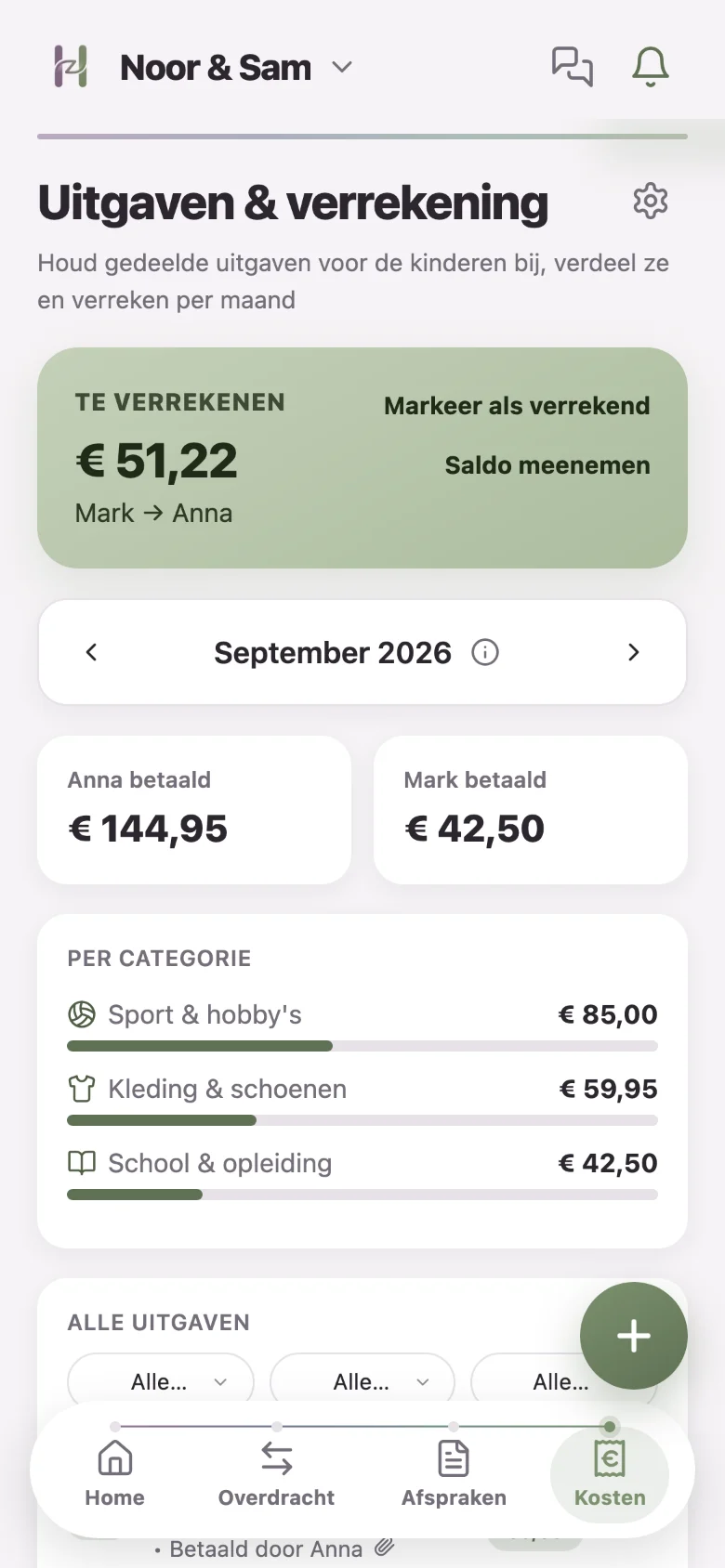
Harmoneaz was developed by co-parents, for co-parents. The app is designed specifically for the daily reality of separated parents with children:

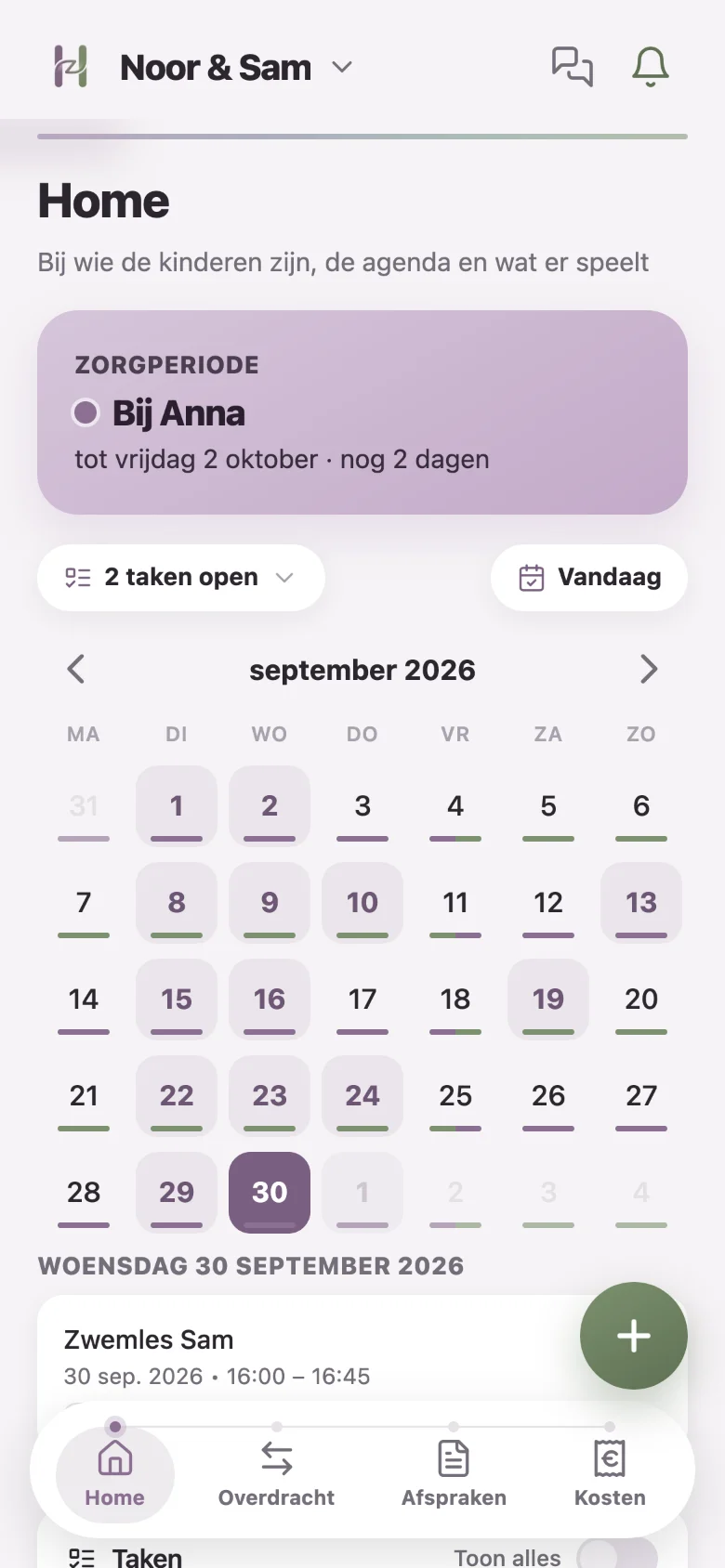
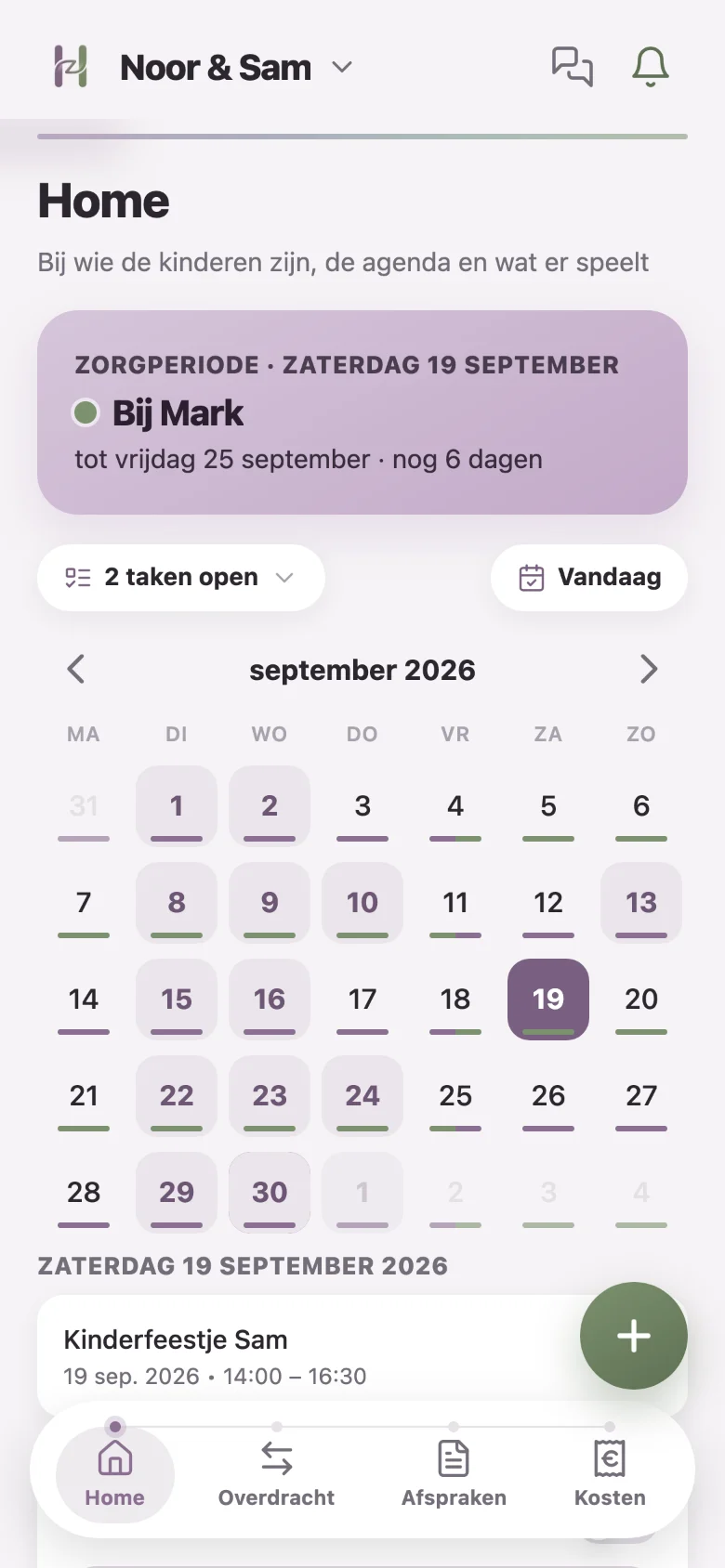
  • Shared calendar with your standard schedule and exceptions (holidays, special days)
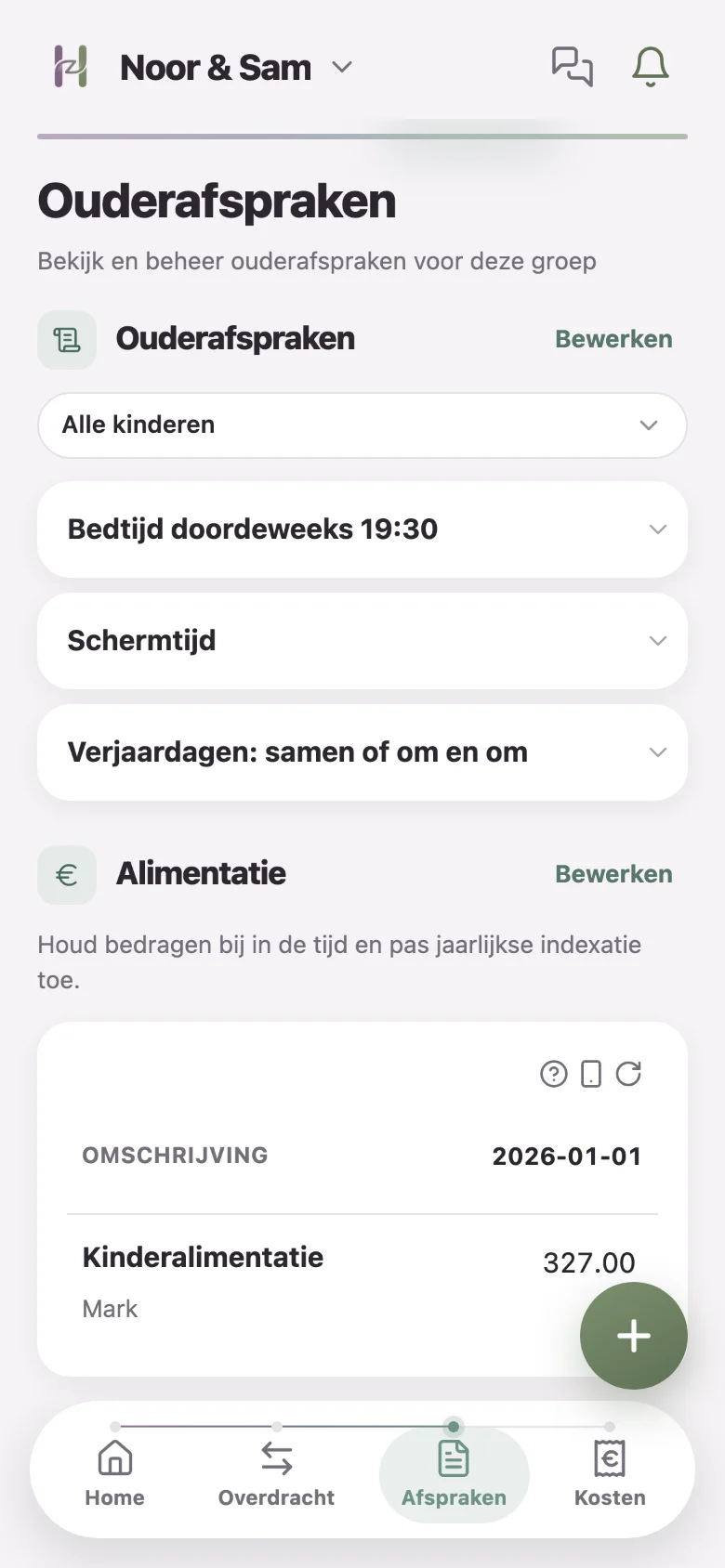
  • Agreements about the children — holidays, special days, child support — visible to both parents
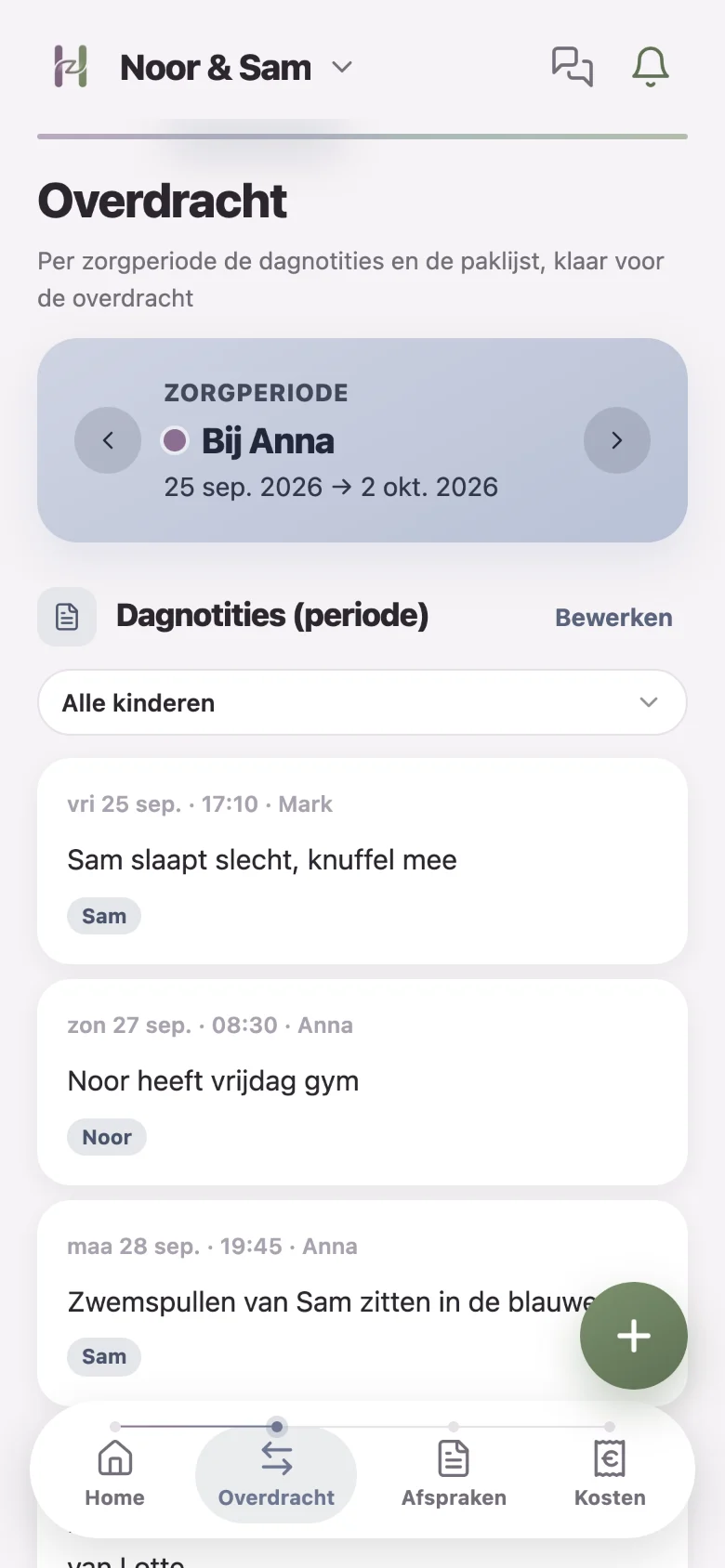
  • Packing lists for the handover moment, so nothing gets forgotten
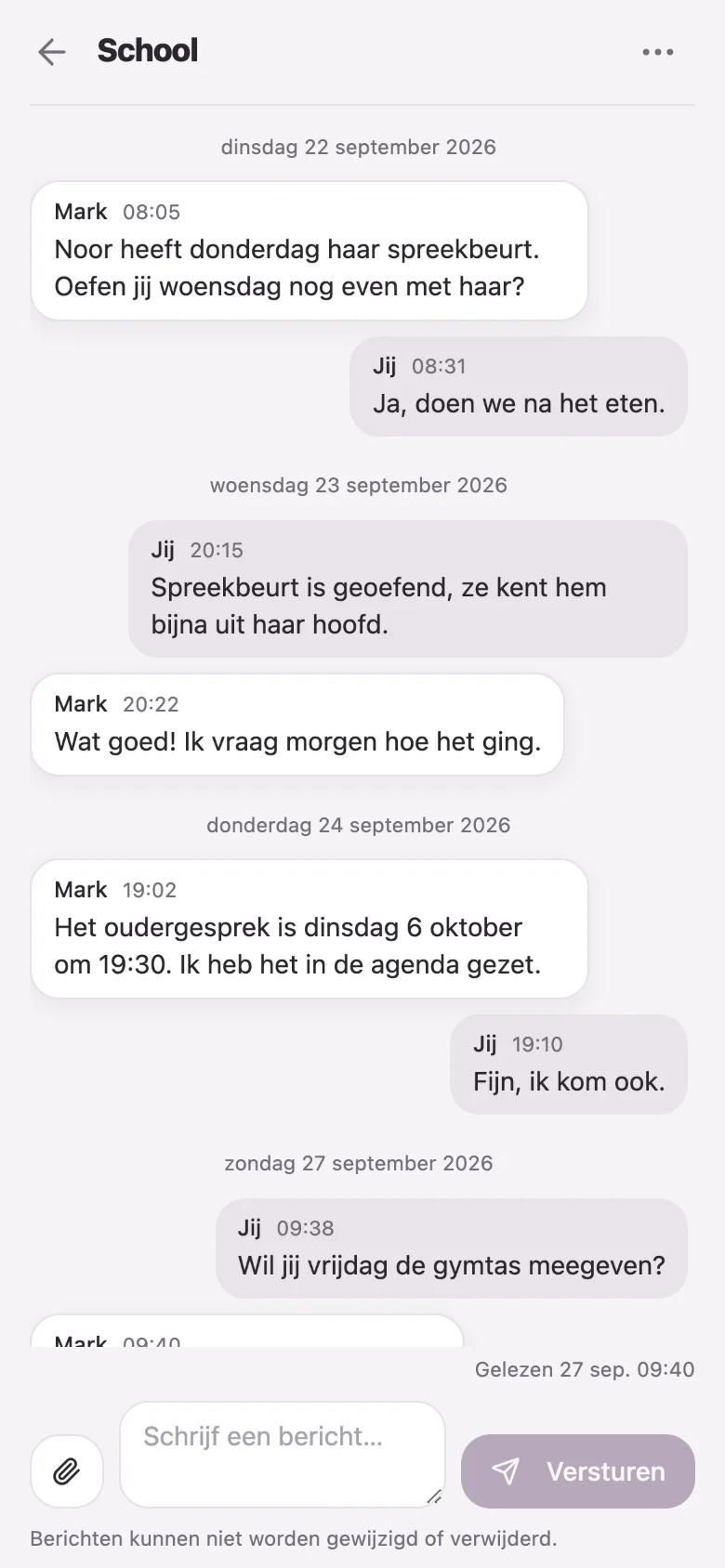
  • No more scattered WhatsApp messages: everything in one calm place
Download on the App StoreGet it on Google Play

In closing

There’s no perfect formula for co-parenting schedules. What works varies per family and changes as children grow older. Start with a model that’s manageable now — you can always adjust it as your situation evolves.

Have questions about how Harmoneaz supports your schedule? Visit our FAQ or download the app to try it yourself.

External sources

Also read: What is co-parenting? A practical guide for newly separated parents · Parenting plan in the Netherlands: steps, requirements and a checklist · Dividing holidays and celebrations as co-parents

Geschreven door Jeroen

I'm a co-parent myself. Scattered notes, re-aligning arrangements every time, tracking child support manually, forgetting to send things along — I ran into all of it. That's why I built Harmoneaz: everything…

Meer over deze auteur →