
Spring naar hoofdinhoud
HARMONEAZ HARMONEAZ
Co-parenting

Co-parenting without conflict: why business-like communication works

Jeroen 5 min lezen
Co-parenting without conflict: why business-like communication works

“You’re late again.” “I told you that already.” “Why don’t you ever read my messages?”

For many co-parents, communication feels like a minefield. A simple question about swimming lessons can escalate into an argument about everything that went wrong in the relationship. Not because the question itself is the problem, but because old patterns resurface easily the moment there’s contact.

The solution isn’t trying harder to be nice. It’s a different way of communicating altogether: business-like, rather than personal.

Why communication between co-parents stays difficult

If you’ve had a relationship with someone, you know their weak spots. You know exactly which tone triggers a reaction, which word touches a nerve. That makes communication after separation fundamentally different from communication with a colleague or neighbour — even when it’s about the same kind of topics: planning, logistics, arrangements.

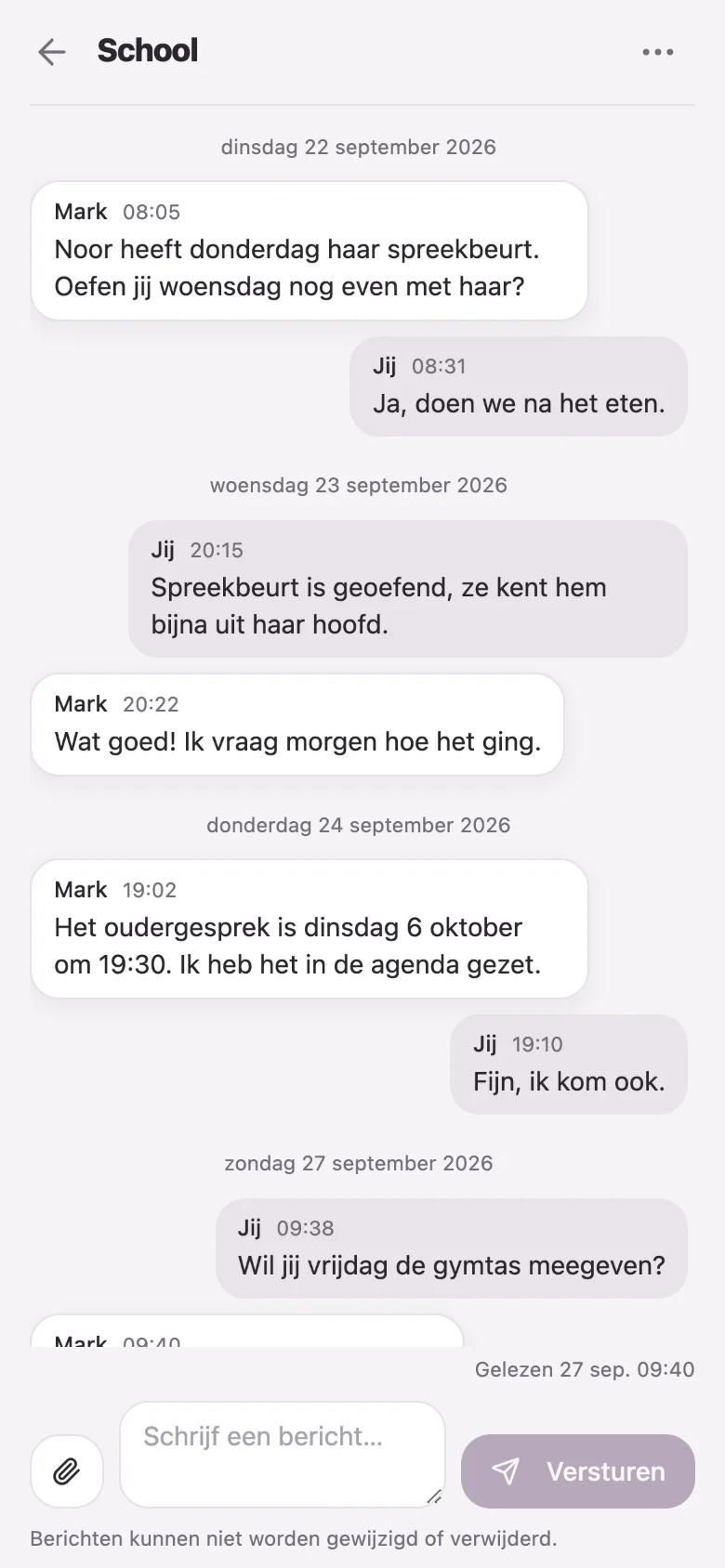
On top of that, a lot of messages go through WhatsApp or text. Text without tone is easy to misread — a neutrally intended message gets read in the voice of an old argument. What would be a short, functional message between colleagues quickly gets read as an accusation between ex-partners.

Communication between co-parents doesn’t need to be warm. It mainly needs to be: clear, predictable, and free of hidden meaning.

The idea behind business-like communication

Business-like communication doesn’t mean being cold or distant. It means communicating the way you would with a business partner you share a project with — in this case, raising your children.

A few features of business-like communication between co-parents:

Facts, not interpretations “Swimming lessons have moved to Wednesday 4pm” instead of “Guess you didn’t check the app again, swimming’s been moved.” The first is information. The second is an accusation dressed up as a message.

Short, functional messages A message about babysitting doesn’t need to explain why you arranged it that way, or how busy your week is. Stick to what the other person needs to know in order to act.

Don’t relitigate the past in a logistics message If something goes wrong — a forgotten handover, a missed appointment — address that separately and deliberately, not in passing within a message about who’s picking up.

Confirmation, not permission-seeking “I picked the kids up at 2pm instead of 3pm on Saturday because of a birthday party” is a statement. You don’t need to ask if that’s okay when it’s already within the agreed flexibility.

Practical techniques that work

The 24-hour rule Feel a charge behind a message you’re about to send? Wait 24 hours (or at least sleep on it) before sending. Most emotional reactions lose their edge after a night’s sleep.

The BIFF method: Brief, Informative, Friendly, Firm This approach, originally developed in the US, works well for communicating with a difficult ex-partner: keep messages short, informative, friendly in tone (or at least neutral), and clear in what you mean. No room for interpretation, no room for a back-and-forth argument.

Separate topics Don’t mix a logistics message with an emotional one. “Can you pick up on Saturday” and “I find it hard that you keep responding late” are two separate conversations — don’t send them in one message.

Keep a record, but don’t use it as a weapon It’s wise to put agreements in writing, especially if the relationship is strained. But don’t use that record to score points in every conversation. It’s a memory aid, not ammunition.

Keep the children out of it Never ask children to pass on messages, and don’t discuss disagreements between parents in their presence — not even indirectly. They are not a messenger and not a referee.

What if the other parent doesn’t cooperate?

Business-like communication works best when both parents try it. But you can also start on your own — and often the dynamic shifts when one side consistently responds neutrally and factually, even to emotionally loaded messages.

Don’t get pulled into defending yourself against accusations in a message. Respond to the logistical question, ignore the charge. “I see you’re asking if I can swap Saturday — that works, I’ll pick up at 10am” is a perfectly good response to a message full of blame. You don’t need to counter every point.

If communication keeps escalating despite your efforts to keep it business-like, a mediator can help you agree on new ground rules for how you communicate — not just what about.

Structure helps: less room for disagreement

A large part of the tension in co-parenting doesn’t come from unwillingness, but from unclarity. Who’s picking up? Was that this week or next week? Did you even see that message?

The less that needs to be coordinated through loose chat messages, the less room for misunderstandings — and the less room for those misunderstandings to escalate.

Harmoneaz was built to take that friction away:

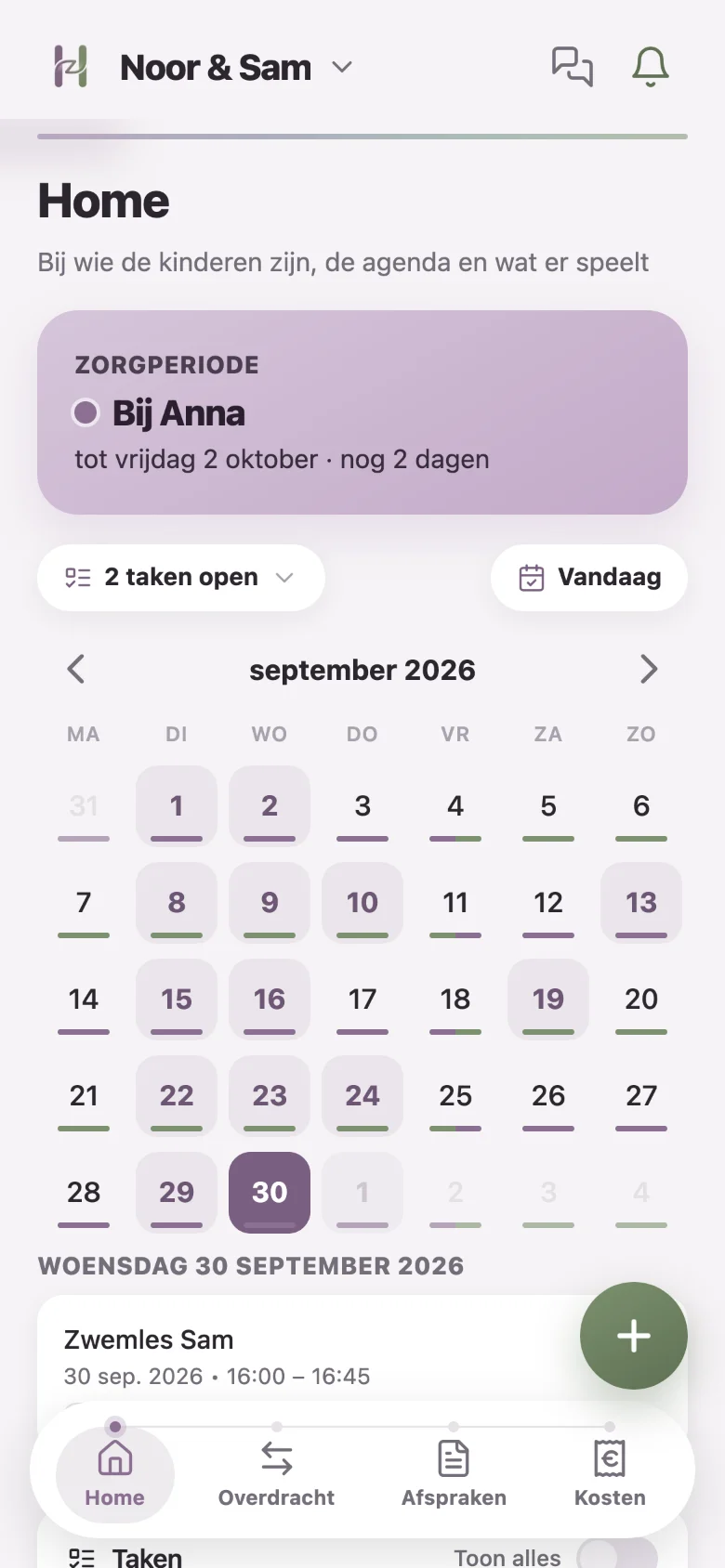
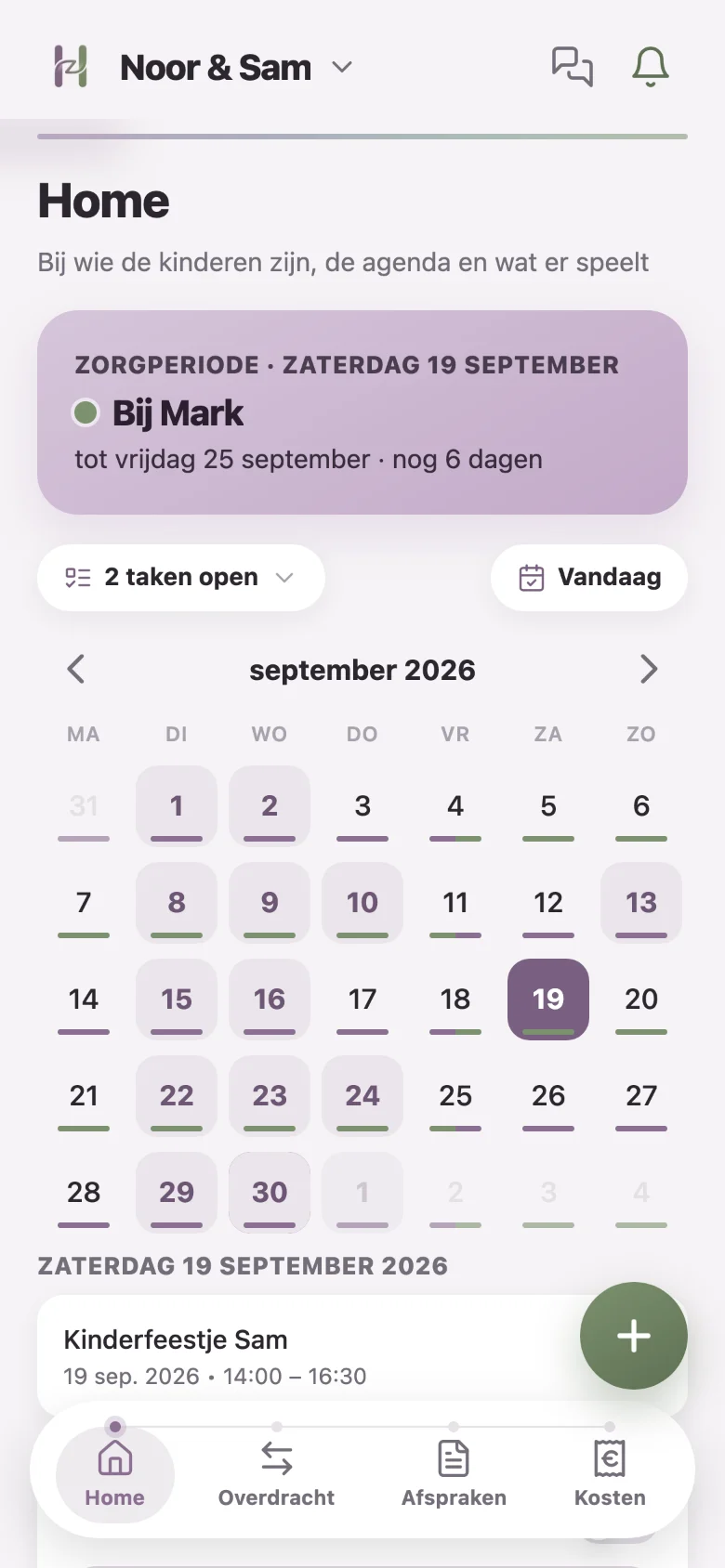
  • One shared calendar with your standard schedule, plus separate appointments like the dentist or football practice
  • Tasks you can hand off to each other, so something small — signing a form, arranging a gift — doesn’t get forgotten or require a text
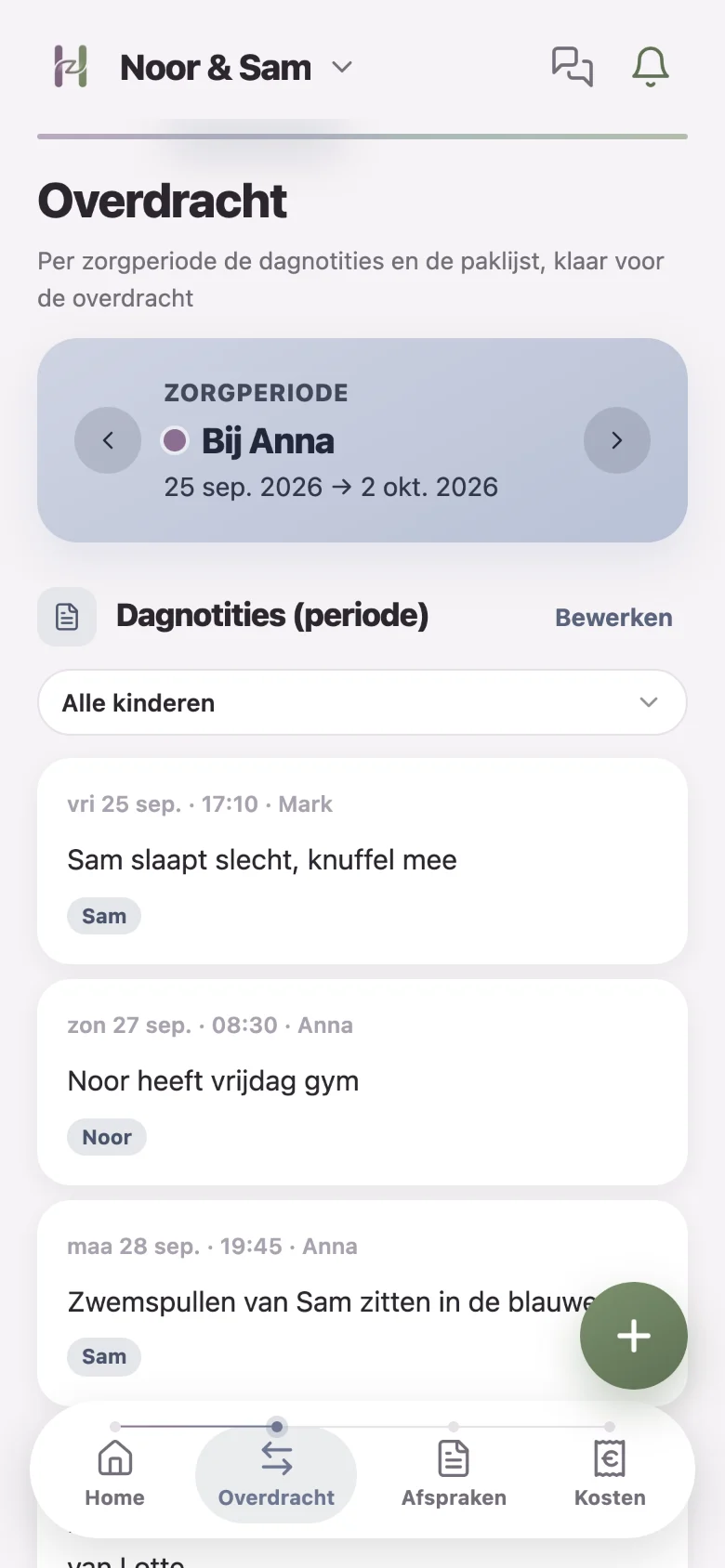
  • Daily notes for special moments, small mishaps, or anything you just want to mention without it turning into a discussion
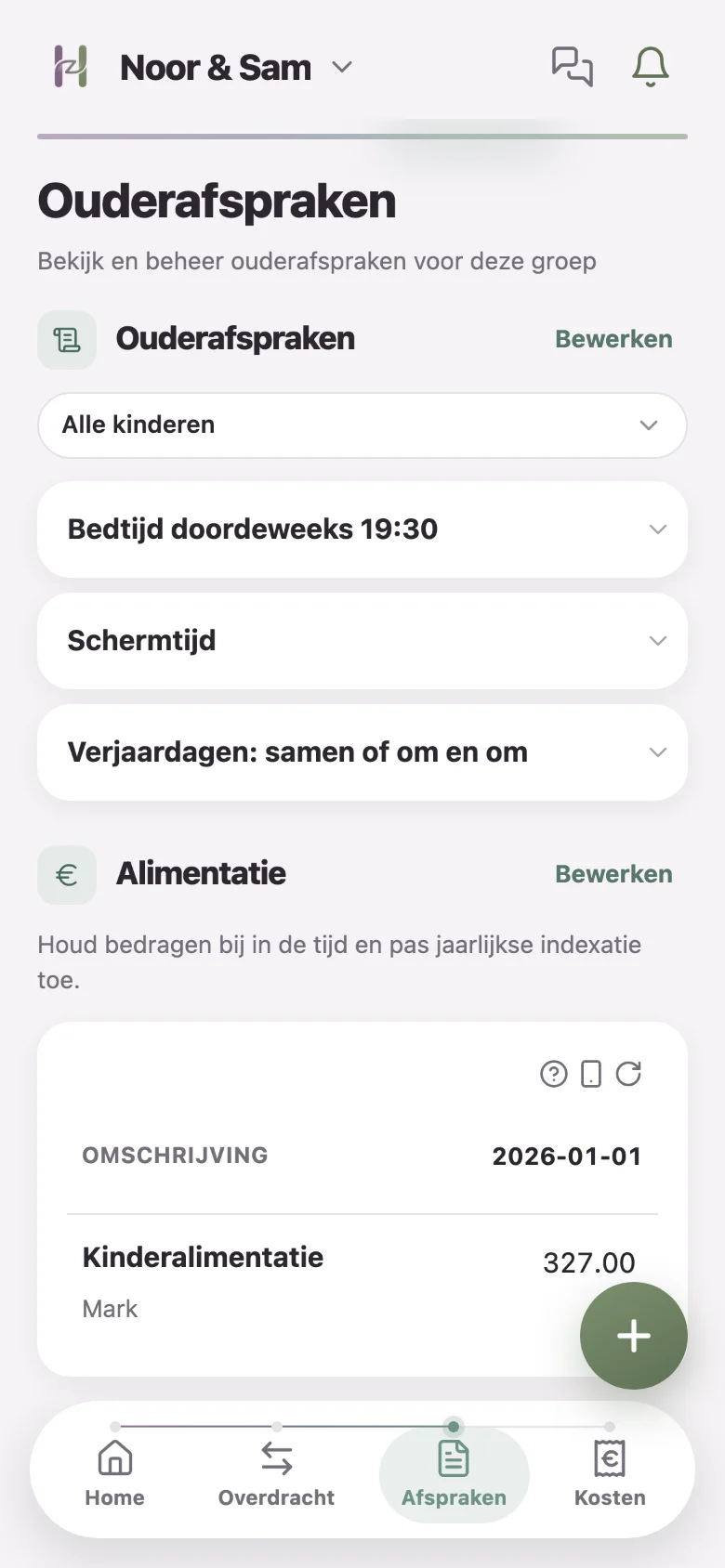
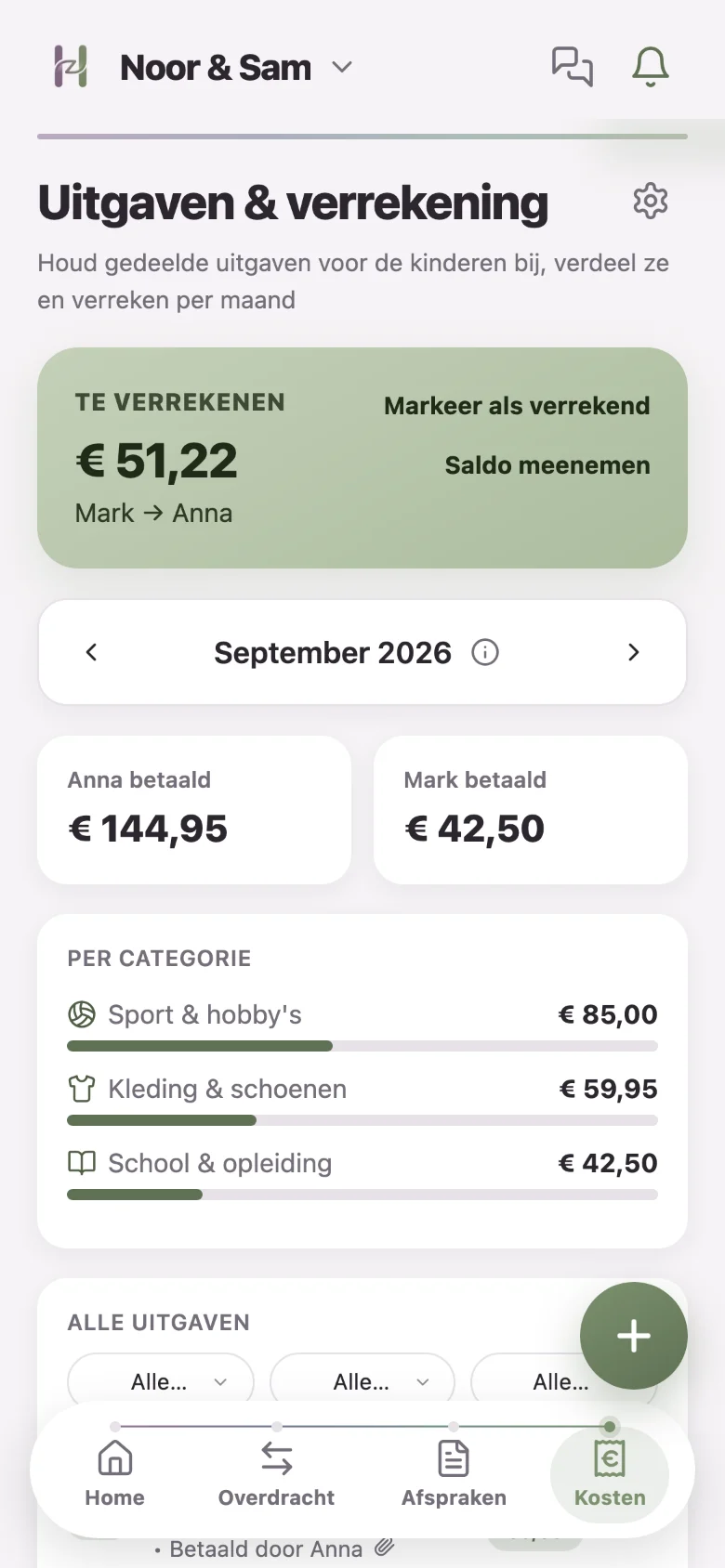
  • Expenses for the children recorded in one place, instead of digging up receipts and amounts in an old chat
  • Parent agreements recorded clearly, so you don’t end up arguing over what you agreed on in the first place
Download on the App StoreGet it on Google Play

In closing

Business-like communication isn’t a trick to suppress your feelings — it’s a way to separate the logistics of co-parenting from whatever emotional history still lingers. That doesn’t just make things easier for you as parents, it brings the most calm for the children, who benefit most from parents who can work together without conflict.

Have questions about how Harmoneaz supports your communication? Visit our FAQ or download the app to try it yourself.

Also read: What is co-parenting? A practical guide for newly separated parents · Co-parenting schedules explained: which model works for you? · Dividing holidays and celebrations as co-parents · Sharing documents and information across two households (coming soon)

Geschreven door Jeroen

I'm a co-parent myself. Scattered notes, re-aligning arrangements every time, tracking child support manually, forgetting to send things along — I ran into all of it. That's why I built Harmoneaz: everything…

Meer over deze auteur →

This article was written with the help of AI and reviewed by the Harmoneaz team for accuracy. For advice specific to your situation, we recommend speaking with a mediator or family law attorney.