

Co-ouderschap
Een nieuwe partner introduceren bij je kinderen en je co-ouder
“Papa heeft een vriendin. Wist jij dat?” Het is zondagavond. Je zoon gooit zijn tas in de gang, trekt zijn schoenen uit en zegt…
Nieuw: een compleet nieuwe look
Zorgschema, overdracht, afspraken, kosten en overleg in één app voor beide ouders. Zodat jullie niet hoeven te zoeken in appjes, mails en losse notities.


14 dagen gratis proberen. Voor iPhone, iPad en Android.
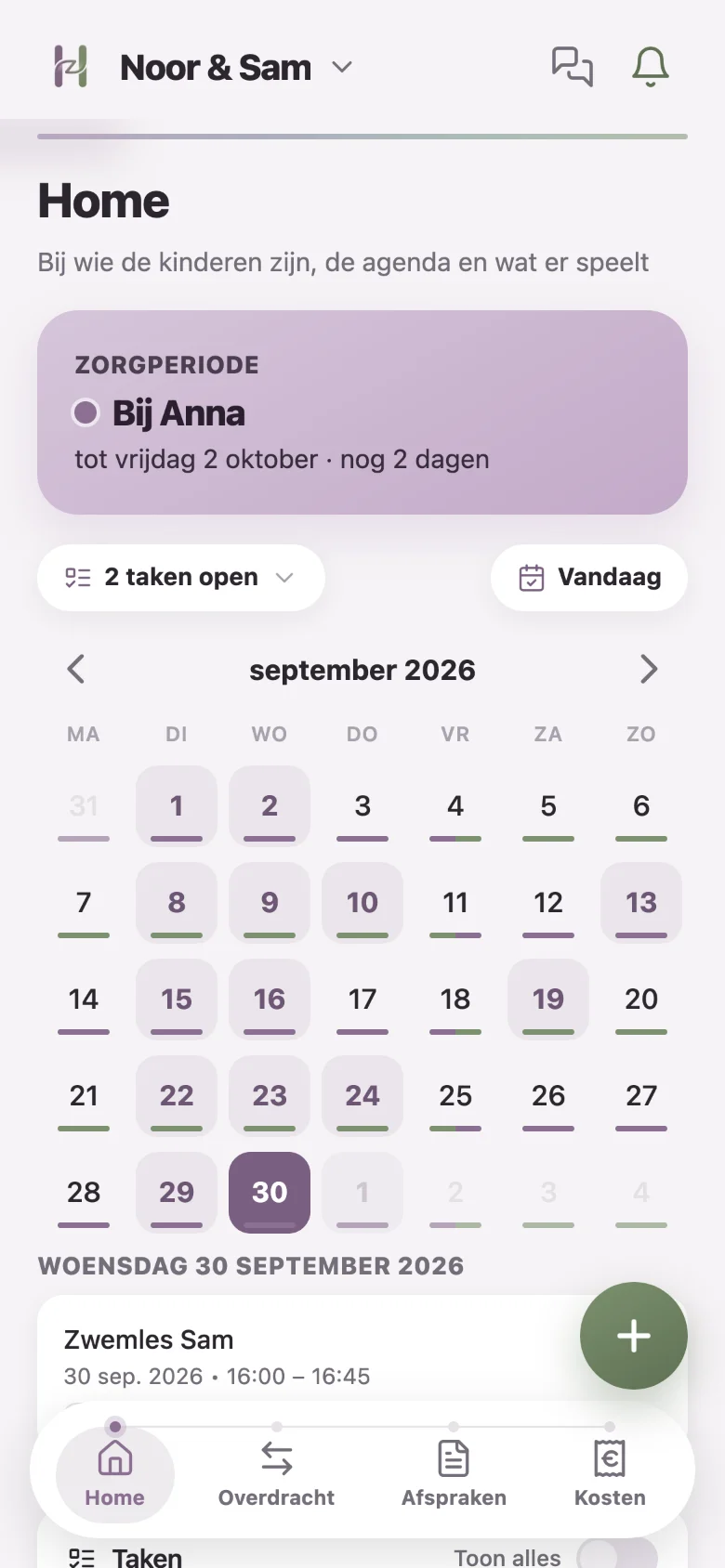
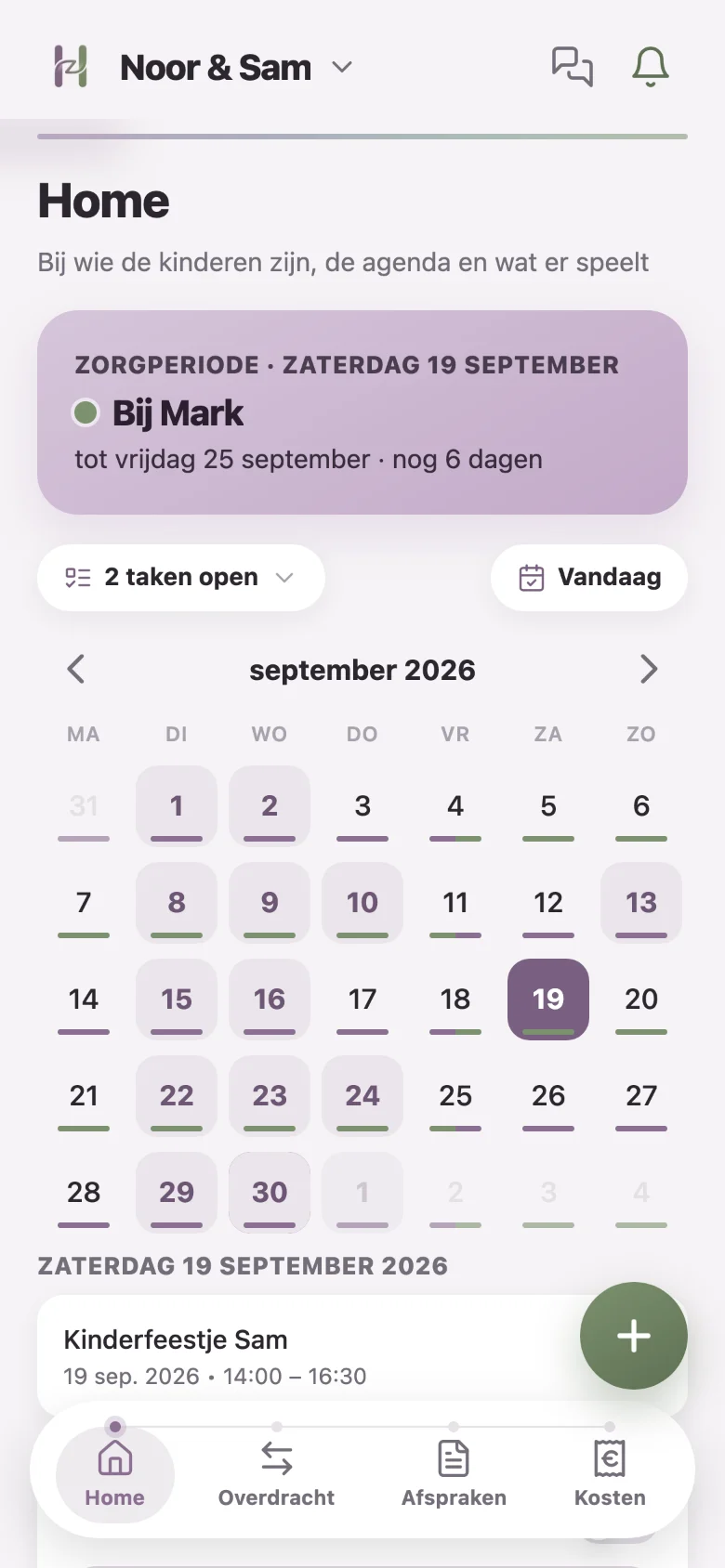
De kalender laat per dag zien wie de zorg heeft. Een ruil of een vakantieweek leg je vast als tijdelijke afwijking; het vaste schema blijft daaronder gewoon staan. Afspraken bij de tandarts, zwemles en de ouderavond staan er voor beide ouders tegelijk in.
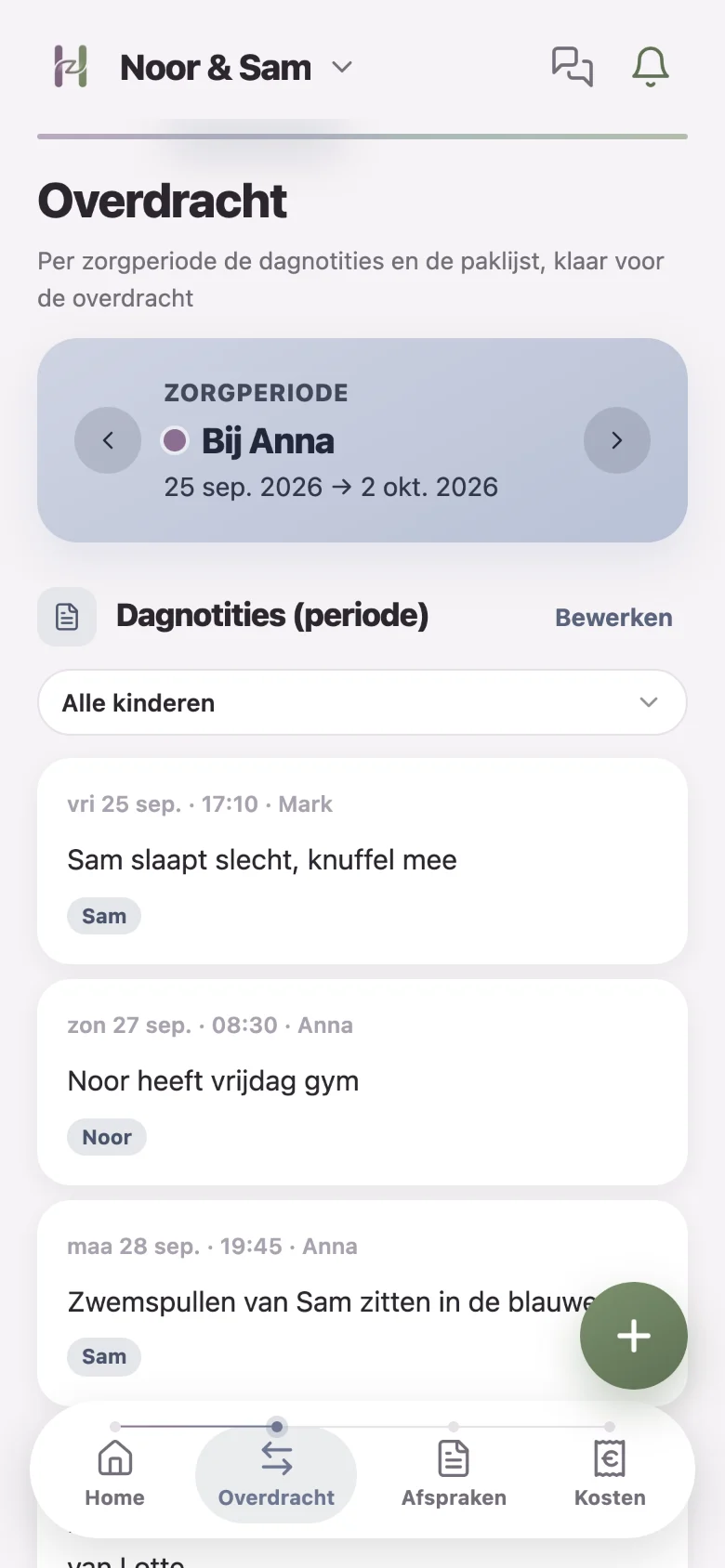
Bij elke overdracht staat klaar wat mee moet en wat de andere ouder moet weten: de inpaklijst, de notities van de afgelopen dagen en wat er de komende dagen speelt.
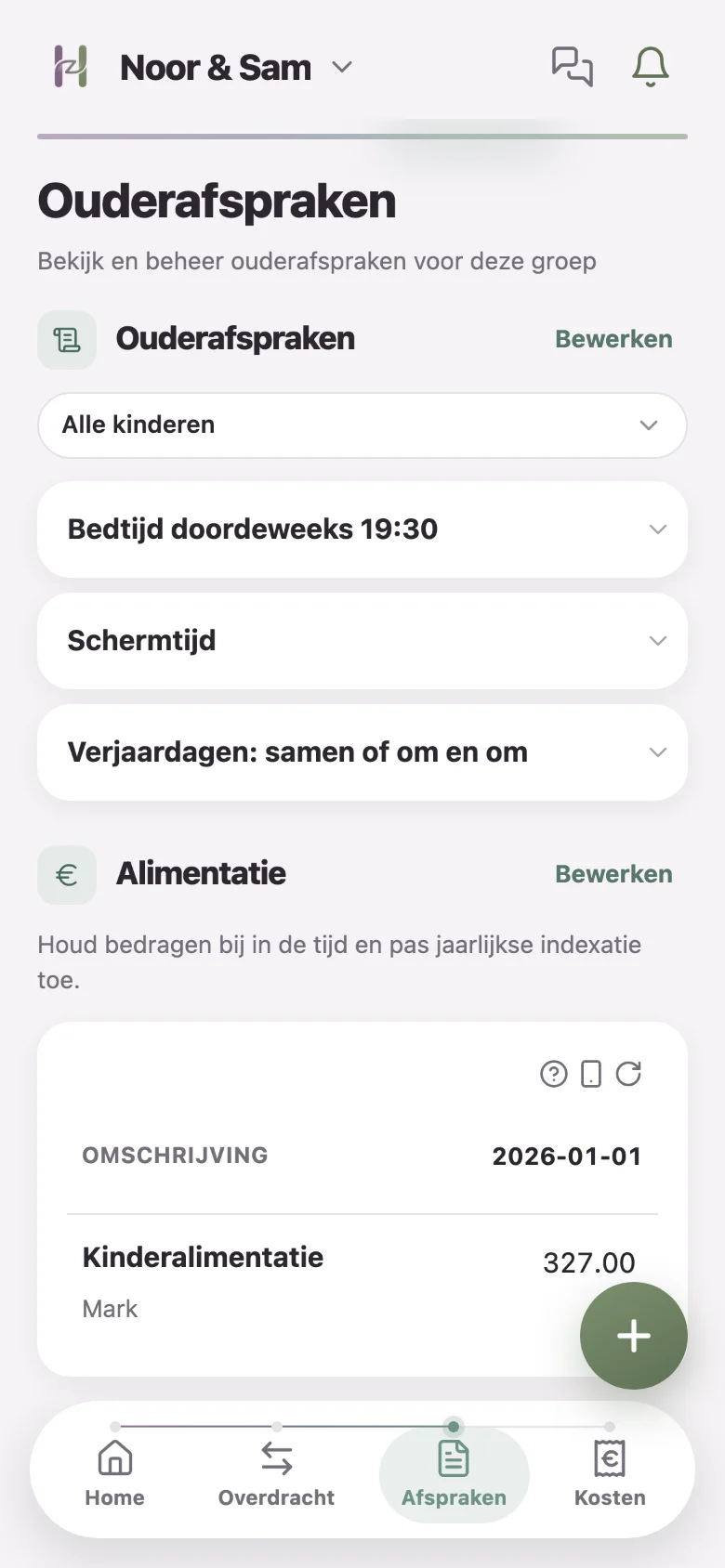
Zet de afspraken uit jullie ouderschapsplan of convenant in de app, zodat ze niet in een la verdwijnen. De alimentatie houd je er ook bij; voor Nederland kan de app de jaarlijkse indexatie toepassen.
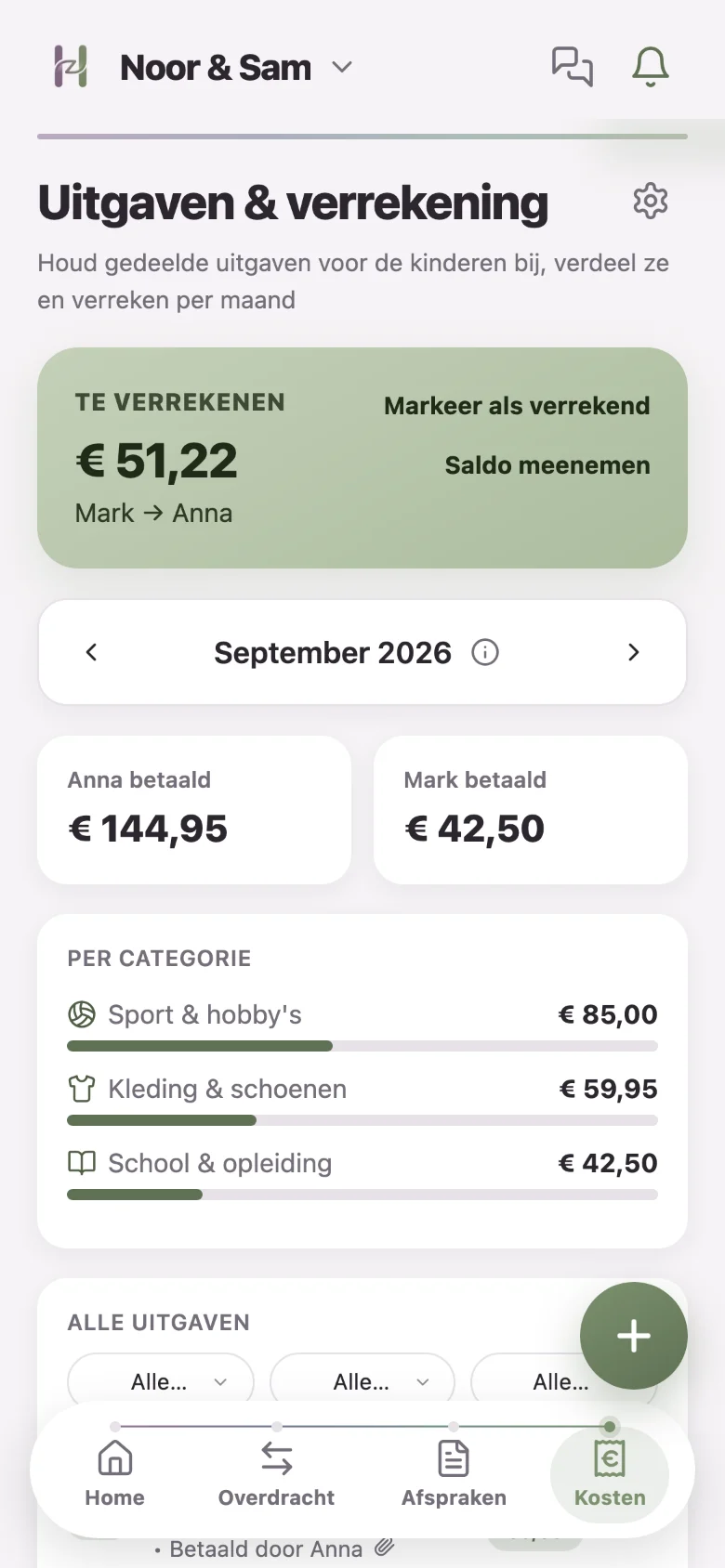
Voeg een uitgave toe met het bonnetje erbij en Harmoneaz houdt bij hoe de kosten verdeeld zijn en wat er nog verrekend moet worden. Betalen doen jullie zelf; de app verplaatst geen geld.
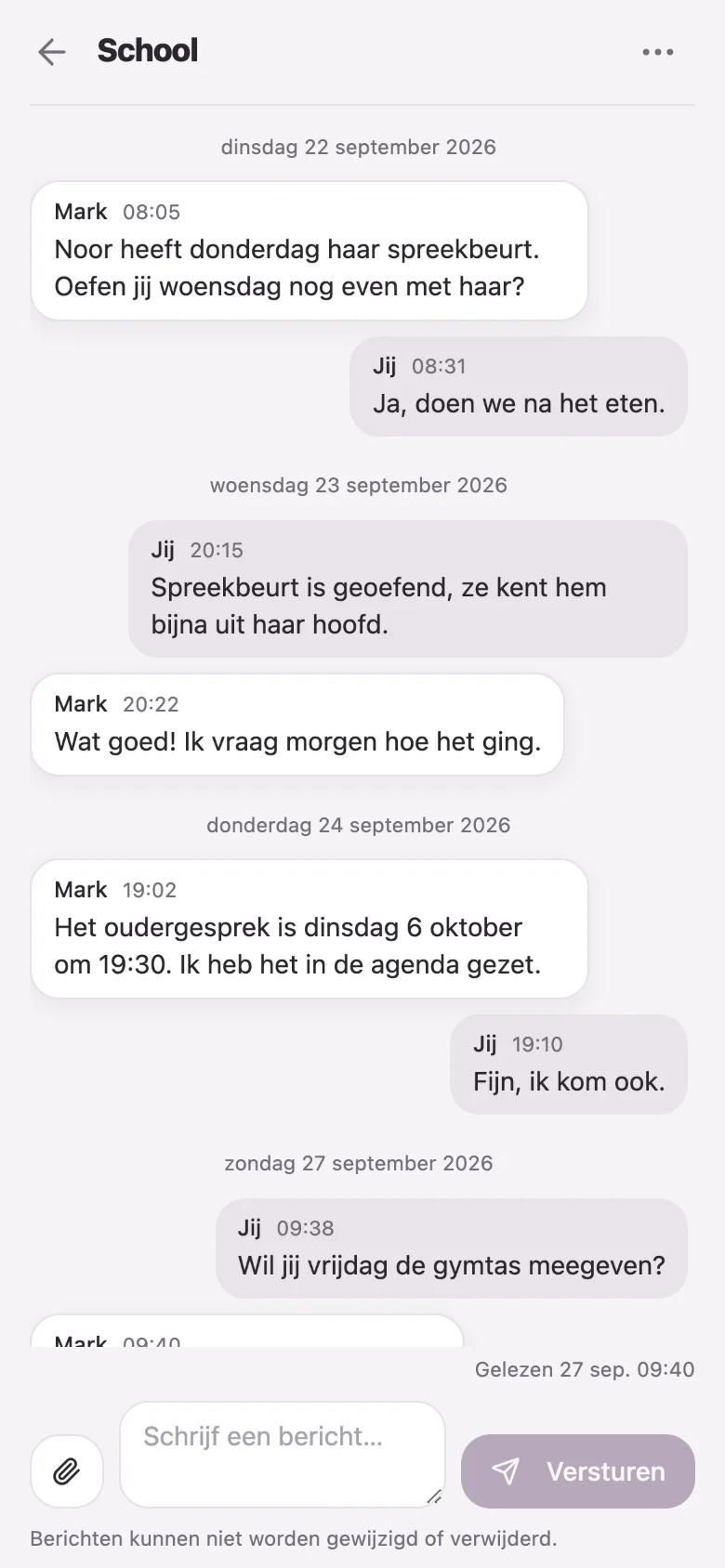
School, vakantie, de nieuwe fiets: elk onderwerp krijgt zijn eigen gesprek, met foto of pdf erbij als dat helpt. Verzonden berichten zijn niet te wijzigen of te verwijderen. Zo blijft het voor jullie allebei een betrouwbaar overzicht van wat er is besproken.
Een rustigere vormgeving, vier vaste plekken onderin en een nieuw onderdeel: Overleg. Bekijk het in dertig seconden.
Ik ben zelf ook co-ouder. Verschillende notities, afspraken elke keer opnieuw afstemmen, alimentatie zelf bijhouden en berekenen, spullen vergeten mee te geven — ik liep er allemaal tegenaan. Daarom bouwden wij Harmoneaz: alle administratie voor de kinderen op één plek, voor beide ouders direct beschikbaar en speciaal voor de markt in Nederland.
Eén abonnement per ouder. De andere ouder kan zonder abonnement meekijken en in Overleg antwoorden.
De eerste 14 dagen zijn gratis. Het abonnement is per ouder en loopt via de App Store of Google Play.
Maandelijks opzegbaar.
Omgerekend minder dan € 3 per maand.
Ja. Alle onderdelen werken ook als je alleen begint. Alleen Overleg werkt pas als de andere ouder een account heeft.
Nee. Het abonnement is per ouder. Zonder abonnement kan de andere ouder alles bekijken, de inpaklijst afstrepen en in Overleg antwoorden; zelf iets toevoegen of wijzigen vraagt een eigen abonnement. Lees: wat kost Harmoneaz?
Alleen de mensen die jullie zelf hebben uitgenodigd in jullie groep. Er is geen openbaar deel en er zijn geen advertenties.
Op servers in de EU. Er zit geen advertentie- of trackingcode in de app. Lees: hoe we jullie gegevens beschermen
Nee, en dat is bewust. Een verzonden bericht blijft staan, zodat het gesprek voor beide ouders hetzelfde blijft. Een onderwerp dat is afgerond kun je archiveren.
“Papa heeft een vriendin. Wist jij dat?” Het is zondagavond. Je zoon gooit zijn tas in de gang, trekt zijn schoenen uit en zegt…

“Mama, wanneer ben ik weer bij papa?” Het is woensdagavond en je dochter staat aan de keukentafel met haar tekening. Ze kijkt op en…

“Heb jij die brief van school ook gehad?” Het is dinsdagavond en je krijgt een appje: “Heb jij die brief van school ook gehad,…
Probeer het 14 dagen gratis. Beschikbaar voor iPhone, iPad en Android.